
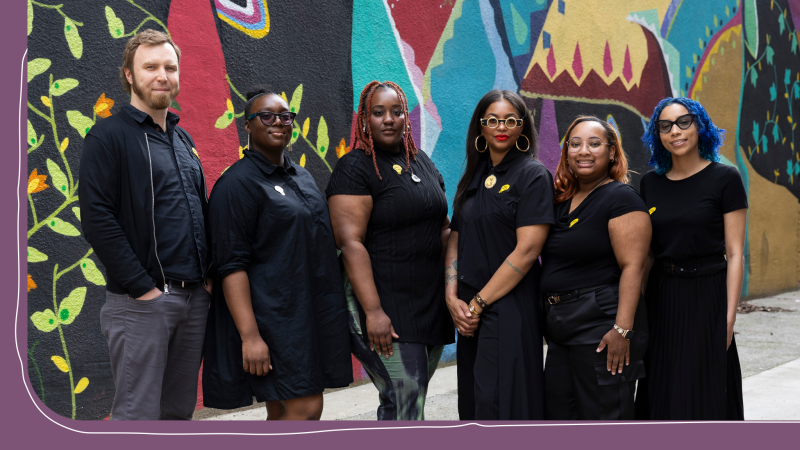
Flint Freedom Schools Collaborative is a community capacity-building organization that develops programs, advises institutions, cultivates local talent, and connects families to resources.
Children do not grow in isolation. Their success depends on the adults, organizations, and relationships around them. Through program development, consulting, and community engagement, FFSC builds its Continuum of Family Care, a coordinated approach spanning generations, abilities, and seasons of life.
The Children's Defense Fund Freedom Schools program was the catalyst. Launched in 2016, the summer program creates a culturally affirming space where literacy, leadership, wellness, and civic responsibility come together. Scholars from kindergarten through 12th grade are encouraged to question, create, lead, and see themselves as capable of shaping their communities. Program Director Marquetta Hall, a former science teacher preparing to become FFSC's executive director in 2030, calls the energy "organized chaos." The rooms are loud on purpose.
Last summer, 99% of FFSC scholars read at or above grade level by the program's end. Eighty-three percent felt less likely to give up facing a challenge, and 98% felt greater confidence in reaching their goals.
Support from the Community Foundation of Greater Flint helped FFSC strengthen Freedom Schools and expand into Family-Informed Year-Round Support and the Talent Development Initiative, putting the Continuum of Family Care into action. Families get support beyond summer. Emerging professionals get paid experience and pathways into leadership. More than half of FFSC's team is under 25, growing from scholars into team members, educators, and decision-makers, strengthening Flint's capacity to lead across generations.

Ashnee Dunning, executive director, has a straightforward way of describing how FFSC shows up for the people it serves. "We show up in a way that's not performative," she says. When a family faced eviction, the team raised a thousand dollars in hours and got on the phone with the rental office. When a fire displaced a family, board members and staff carried beds and mattresses up the stairs.
That trust carries into the Talent Development Initiative, FFSC's paid workforce program training young people as learning facilitators, operations staff, marketers, and advancement professionals. Hall describes the approach: "Whatever they say their superpowers are, that's what they are good at." Team members have changed college majors after a summer in the program, or moved into other parts of the organization, following their strengths. When they leave, they leave equipped.
A grant from the Flint Kids Fund, through the Community Foundation of Greater Flint, deepened that work in 2025, funding experiential learning, specialist trainers, and wraparound support for families with emergent needs. For FFSC, the relationship goes beyond a grant: access, feedback, and a consistent presence through hard times many organizations did not survive.
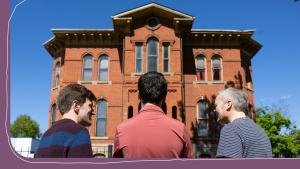
FFSC recently finalized a contract with Flint Community Schools to bring the program into Potter Elementary.
As Dunning says: "We ain't got nothing but time to fight for Flint."