
In Grand Blanc, a committee of educators is removing the barriers that keep students from walking through the door
Grand Blanc's secondary schools are watching the same pattern repeat. At Grand Blanc West Middle School, one in three students is chronically absent, missing 20 or more days a year. Behind that number is almost always a student who wants to be there and cannot find a way in.
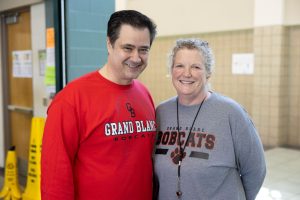
Matt Adams, West Middle School Assistant Principal, and Sally Hohn, Student Services Coordinator, have spent years chasing what gets in the way. Social anxiety that never fully lifted after the pandemic. A single parent driving kids to three school levels who can only make one trip. Gas money that turns a 20-minute commute into a grocery-budget decision. Attendance habits inherited from watching a sibling or parent do the same thing.
The Proactive Attendance Committee answers that question, building by building. Working across Grand Blanc's secondary schools, the committee identifies chronically absent students early and starts with connection, not consequences.
From there, the committee finds what a student needs and gets it to them. Clothing closets in every building let a student walk in with confidence. A partnership with Genesee Health Systems and Easterseals puts counseling inside the school. Monthly and quarterly incentives mark progress. Across all of it, every student stays connected to at least one adult who knows them by name.
A grant from the Grand Blanc Community Fund and the Grand Blanc Youth Initiative Program Fund made the work possible.
One student came from a family where missing school was just how things went. He'd watched his older siblings build the habit and picked it up without deciding to. By the time the committee focused on him in seventh grade, he'd missed 25 days that year. In the second half, he missed six.
Adams points to what shifted: counseling, adults who took the time to notice him, a family starting to see school as worth the fight. "It's been a multifaceted approach," he says. The committee worked on the barriers inside the student and the ones outside him at the same time and stayed in the conversation long enough for it to matter.
Adams doesn't soften what's riding on it. "This is an investment in our community for the long term," he says. "If these students continue to not attend school, they're not going anywhere. They're staying in our community. And the less opportunity they have to learn things in school, the more they're going to learn things elsewhere, and those aren't necessarily the skills we want our community to embrace. We want academic skills to be the thing that drives our community."
"We want kids here. That's what we're here for." — Sally Hohn, Student Services Coordinator