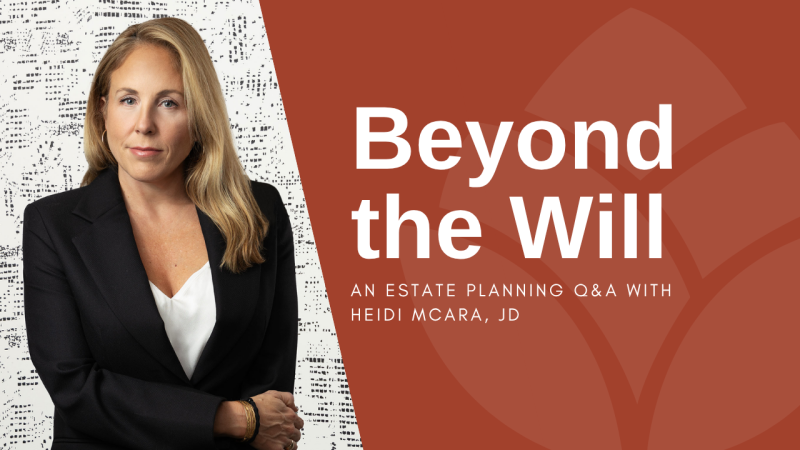
Leaving a legacy is more than just a will. Vice President of Development and Donor Services Lottie Ferguson sat down with Heidi McAra, JD, an estate planning attorney with Howard & Howard and a former trustee of the Community Foundation of Greater Flint. In this Q&A, Heidi shares what belongs in an estate plan beyond a will, how often to revisit one, and why legacy is about more than money.
Lottie Ferguson: A lot of people hear "estate planning" and only think about wills. What else should we include in that conversation?
Heidi McAra: A will is definitely always part of it, no matter what type of estate plan I do. A will is a set of instructions to the probate court — it says, "here's who is to be my personal representative, and here's who is supposed to get what I leave behind." If you don't have a will that specifies what you want and who's in charge, the state provides one for you. That's called intestate succession, and you probably, in some cases, won't like that. There's also a lot of misconceptions about the word "estate." Everybody has an estate. Even if you have 50 cents in the bank, you still have an estate.
LF: Can you talk to us about the difference between a will, a trust, and a power of attorney?
HM: Think of a trust as a bucket. You create the trust bucket, and upon your passing, everything you leave behind flows into that bucket. From there, you decide who's in charge and what percentages or charitable gifts go to whom — done privately, without court intervention. Beneficiary designations work a bit differently: an account can be payable on death directly to someone, bypassing probate court. But that's not always a great idea — those under 18 can't receive a direct asset, so if you leave money to a five-year-old, we still have to go to probate court to get someone appointed on their behalf. That's often where a trust comes in.
The other part of a plan addresses incapacity. A general durable power of attorney lets someone make financial and property decisions for you if you become incapacitated. A patient advocate designation does the same for your medical decisions when you're unable to make them yourself.
LF: How often should someone revisit their estate plan, and what should trigger a review?
HM: It is not one and done. I frequently open estate plans where the paper is yellowing. I like to say, every three to five years, let's take a look back — powers of attorney especially have a bit of a shelf life. Beyond that, I watch for "the Ds": diagnosis, disability, divorce, death — or it's been a decade. Any of those, let's pull the plan out and make sure it still aligns with your wishes. A lot of attorneys, myself included, will do periodic reviews at no charge or minimal charge.
LF: Some people think they need a certain amount of money to have an estate plan, or to leave a charitable gift. What do you say to that?
HM: There is not a minimum threshold. Everyone leaves behind an estate, and sometimes it includes intangible gifts — wisdom, stories, intent and desires, tangible heirlooms. I think too often those intangible things get left out of an estate plan. My best advice, if you're able, is to give sentimental items to the family member you'd like while you're here to see the joy it brings — some of the biggest family conflicts we've seen come from disagreements over relatively small-dollar items, not large estates.
LF: What about digital assets — social media accounts, photos, things that are such a big part of our lives now?
HM: They're all different, and they're bound by terms and conditions most of us don't read, so I can't give a blanket answer. What I can say is that in new documents, digital assets are included — when we create trusts and powers of attorney, we authorize your fiduciary or agent to have authority over those assets, too. That's another reason to get older documents updated.
LF: You've connected a number of your own clients to the Community Foundation. Why do you recommend community foundations for legacy planning?
HM: I've seen gifts go to nonprofits for the most imminent need, often payroll, and a $10,000 gift arrives just in the nick of time. But think about what that same gift could do pooled with millions of dollars at the Community Foundation. I'm never dissuading anyone from a charitable gift they're passionate about — but if there's flexibility or uncertainty, that's where I bring up the benefits of a community foundation.

LF: When you think about legacy, what do you hope people take away from a conversation like this one?
HM: Two things. First, it takes courage to face mortality, but there are amazing attorneys and advisors in the community who can help you walk through it no matter where you're at — estate planning is for all estates, large, small, and otherwise. Second, and most importantly: you're going to end up with a wonderful binder of legal documents, but there are things that don't belong in there. The incredible gift of leaving handwritten notes, videos, something in your own voice that tells the next generation what your intent was and your wish for them — it's a beautiful gift that's too frequently left out. So I'd encourage everyone: what's beyond the estate plan?
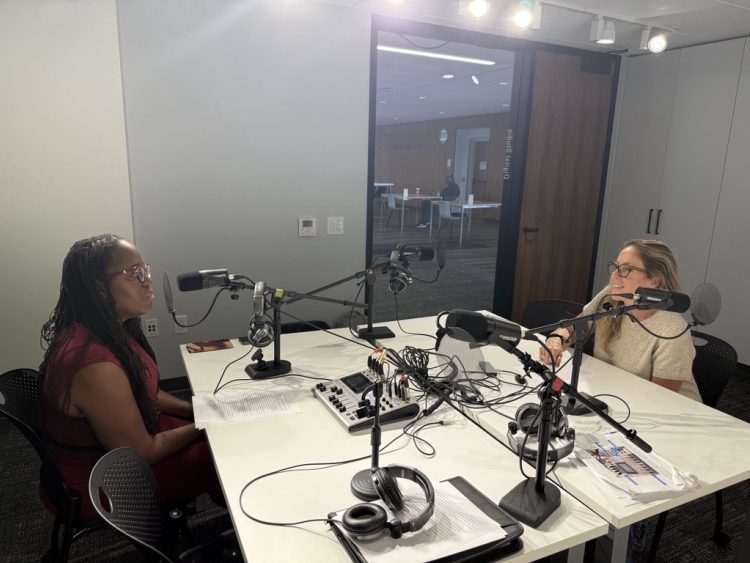
Philanthropy Speaks Podcast
This Q&A is an excerpt from an episode of Philanthropy Speaks. Tune in to the full podcast here.